
What Is UI Design?
UI Design Definition
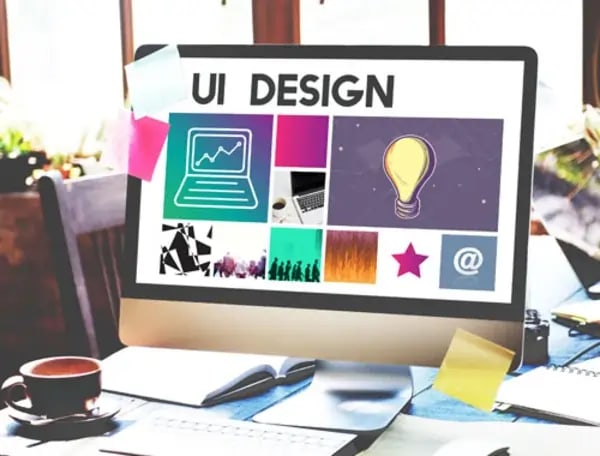
User Interface Design is the process of designing the visual elements of a product (buttons, icons, typography, colour schemes) that users interact with.
UI Design: Why It Matters
UI design is the first thing users see and instinctively judge. An inconsistent or unattractive interface creates immediate distrust and reduces engagement, while a well-crafted UI builds credibility and makes interactions feel effortless from the first click.
UI Design: How It Works
UI designers create visual design systems encompassing typography scales, colour palettes, button states, icon libraries, spacing rules, and component libraries. These ensure consistency across every page. Tools like Figma are used to produce high-fidelity mockups before development begins. That reduces costly revision cycles.
A fintech app redesigns its dashboard, replacing an overwhelming grid of numbers with a clean summary using consistent colour-coded categories and clear data visualisations. User satisfaction scores improve from 3.2/5 to 4.6/5 within six weeks of launch.
Quick Facts
- UI and UX design are distinct but interdependent: great UX can be undermined by poor UI
- Consistent UI reduces cognitive load, making products easier to learn and faster to use
- Design systems like Google's Material Design or Apple's Human Interface Guidelines ensure scalable consistency
- Text contrast ratios must meet WCAG AA standards (minimum 4.5:1) for accessibility compliance


Need Help With UI Design?
Our team of experts can help you implement effective strategies.
- Expert consultation
- Tailored strategy
- Measurable results
No long-term commitment. Cancel anytime. 100% satisfaction guaranteed.