
Answer Engine Optimisation (AEO): How to Rank in AI Search in 2026


Your next customer might never see your website in a list of search results. They'll just read the answer an AI gives them. Either your business is named in it, or it isn't.
Search behaviour is shifting fast. Instead of typing a query and scanning a page of links, people are asking ChatGPT, Perplexity, Google's AI Overviews and Microsoft Copilot a question. They take the synthesised answer at face value. Answer engine optimisation (AEO) is the practice of making sure your business is the source those answers are built from.
The good news for anyone who has invested in SEO: AEO is not a separate discipline you start from scratch. It's an extension of the fundamentals: clear answers, credible content, structured data and off-site authority. Those get tuned for how large language models read and cite the web. This guide explains how AI answer engines actually choose their sources and gives you an eight-step checklist to start earning citations. If you'd rather have it done for you, our answer engine optimisation service covers the whole programme.
What Is Answer Engine Optimisation (AEO)?
Answer engine optimisation is the process of structuring and promoting your content so that AI-powered answer engines select it as a trusted source. That means they name or link your business in the responses they generate. Where traditional SEO aims to win a ranking position, AEO aims to win a citation inside the answer itself.
An "answer engine" is any tool that returns a direct, synthesised answer rather than a list of links. The big ones in 2026 are ChatGPT, Google's AI Overviews, Perplexity, Microsoft Copilot and Gemini. They don't crawl and rank the way classic search does.
They read the web, build an internal understanding of what's true and credible, and assemble an answer on demand, often citing a handful of sources. This retrieve-then-write approach is called retrieval-augmented generation (RAG). Understanding it is what makes AEO work.
AEO vs SEO vs GEO: What's the Difference?
You'll see three acronyms used almost interchangeably. They overlap heavily, but the distinction is worth understanding:
| Term | Goal | Where it shows up |
|---|---|---|
| SEO | Rank in organic search results | Google & Bing links |
| AEO | Get cited in a direct answer | AI Overviews, ChatGPT, Perplexity |
| GEO | Be referenced by generative models | LLM-generated content |
GEO (generative engine optimisation) and AEO are often the same thing described from different angles. GEO emphasises the underlying generative models, and AEO emphasises the answer the user sees. In practice you optimise for both with the same work. What matters is that all three sit on the same foundation. It's the technical SEO and content quality that lets a machine read, trust and reuse your pages.
How AI Answer Engines Choose Their Sources
No one outside the labs has the exact recipe, but the patterns are consistent across engines. Five signals reliably influence whether your content gets pulled into an answer:
- Direct, early answers. Content that states the answer in the first sentence or two, before the backstory, is far easier for a model to extract and quote.
- Topical authority. Sites that cover a subject thoroughly and consistently are treated as more credible sources than those with one thin page on the topic.
- Structured, scannable formatting. Clear headings, short paragraphs, lists, tables and FAQ blocks map neatly onto how an LLM segments and retrieves information.
- Corroboration across the web. Models weigh what other sites say about you. Consistent mentions, reviews and citations elsewhere raise your trust score.
- Freshness and accuracy. Up-to-date pages with correct facts, dates and figures are preferred. Answer engines actively avoid surfacing stale or contradicted claims.
Answer engines don't reward the longest page. They reward the page that answers the question fastest, most clearly, and with the most corroboration from the rest of the web.
How to Optimise for AI Search: An 8-Step Checklist
Here's the practical work, in the order we'd tackle it for a client:
1 Answer the question in the first two sentences
Lead with the answer, then explain. Put a clear, self-contained response right under each heading so a model can lift it without needing the surrounding context. The intro-then-payoff structure that works for human skimmers works for LLMs too.
2 Build genuine topical depth
One page rarely earns authority. Cover the topic as a cluster: a pillar plus supporting articles that interlink. This is the same hub-and-spoke model that powers good keyword research and content planning. It's exactly what signals expertise to an answer engine.
3 Add structured data (schema markup)
Mark up your pages with schema: FAQPage, HowTo, Article, Product and Organization. This helps machines parse meaning, not just words. Our schema markup service handles this, or you can validate your own with a structured-data tester before you ship.
4 Use a question-and-answer format
Real questions as headings, concise answers beneath them. This mirrors how people prompt AI tools and gives engines clean question-answer pairs to draw from. A dedicated FAQ section near the foot of key pages is one of the highest-leverage AEO moves.
5 Fix the technical foundations
If a crawler can't render or index your page, no AI will ever cite it. Fast load times, clean crawlability, mobile-friendliness and valid markup are prerequisites. Run the SEO audit checklist before you worry about anything AI-specific.
6 Build off-site authority and mentions
Answer engines lean heavily on what the broader web says about you. Earn editorial mentions, keep your business details consistent across directories, and gather genuine reviews. The more corroboration, the more confidently a model will name you.
7 Keep content current
Stale pages get passed over. Add and update dates, refresh statistics, and revisit your most important pages on a schedule. Freshness is a trust signal for both classic search and AI answers.
8 Test your prompts and measure citations
Ask the engines the questions your customers ask. Note where you're cited, where a competitor is, and where no one is. That gap analysis becomes your content roadmap.
AEO for Australian Businesses
For Australian businesses there's an extra layer worth getting right. Answer engines weigh location and locality. Being explicit about where you operate helps you surface in region-specific answers ("best conveyancer in Brisbane", "digital marketing agency Melbourne"). Consistent local signals, like a complete Google Business Profile, accurate citations and genuine reviews, feed both local SEO and AEO at once.
Australian-led delivery also helps with accuracy: pricing in AUD, references to local regulations, and examples grounded in the Australian market. That makes your content more quotable for region-aware answers. It's also less likely to be passed over for a generic overseas source.
How to Measure AEO Performance
AEO is harder to measure than rankings, but not impossible. Track these four things:
- Citation tracking. Regularly prompt the major engines with your target questions and log when and how your brand appears.
- Referral traffic from AI tools. Watch analytics for visits from ChatGPT, Perplexity and similar: a growing, identifiable channel.
- Branded query lift. As AI answers name you more often, branded searches and direct visits tend to rise in parallel.
- Share of answer. For your priority questions, what proportion of answers cite you versus competitors? That's your AEO scoreboard.
Common AEO Mistakes to Avoid
- Treating AEO as a replacement for SEO. It isn't. AI engines draw from indexed, crawlable, credible pages. Neglect your technical and on-page SEO and there's nothing for them to cite.
- Burying the answer. A 300-word preamble before the payoff might please a meandering reader, but an answer engine will skip it for a competitor who answered in line one.
- Skipping structured data. Without schema, you're forcing machines to guess your meaning. FAQPage and Article markup are low-effort, high-return.
- Ignoring off-site reputation. You can't fully control what the web says about you, but inconsistent details and zero third-party mentions actively suppress your trust signals.
- Writing thin, generic content. Answer engines are trained to avoid low-value pages. Depth, originality and accuracy: the hallmarks of good content writing: are what get you quoted.
- Never testing the engines. If you're not asking ChatGPT and Perplexity your customers' questions, you have no idea whether your AEO is working or where the gaps are.
Frequently Asked Questions
Is AEO replacing SEO?
No. AEO builds on SEO. Answer engines pull from content that is indexed, credible and well-structured: all of which comes from solid traditional SEO. You need both: SEO to be found and crawled, AEO to be cited in AI answers.
How do I get my business mentioned in ChatGPT?
Publish clear, authoritative content that answers real questions directly, add structured data, and build consistent mentions and reviews across the web. The more credible and corroborated your business is, the more likely an LLM is to name it.
What is the difference between AEO and GEO?
They describe the same work from different angles. AEO (answer engine optimisation) focuses on the answer the user sees; GEO (generative engine optimisation) focuses on the generative models producing it. The optimisation steps are effectively identical.
Does schema markup help with AI search?
Yes. Schema markup gives machines an explicit, structured description of your content's meaning, making it far easier for an answer engine to parse and reuse. FAQPage, HowTo and Article schema are the most useful for AEO.
How long does AEO take to show results?
Structured, well-answered pages can start earning citations within a few weeks of being crawled. Building the topical and off-site authority that produces consistent citations is a longer game. Expect three to six months, similar to traditional SEO.
Wrapping Up
Answer engine optimisation isn't a gimmick or a replacement for everything you've already built. It's the natural next step for businesses that want to stay visible as search moves from links to answers. Get the fundamentals right: clear answers, real depth, structured data and off-site credibility. You'll be the source the AI reaches for.
Start with one high-value page: lead with the answer, add an FAQ with schema, and test it against the engines your customers actually use. Then repeat. The businesses that adapt to AI search early will own the answers before their competitors realise the rules changed.
Rather have it done for you? Get SEO, web, content, branding and marketing as one teamexplore Growth Partner plans from $750/mo.

Technical SEO: The Complete Guide to Optimising Your Site
How to Do Keyword Research That Actually Drives Traffic
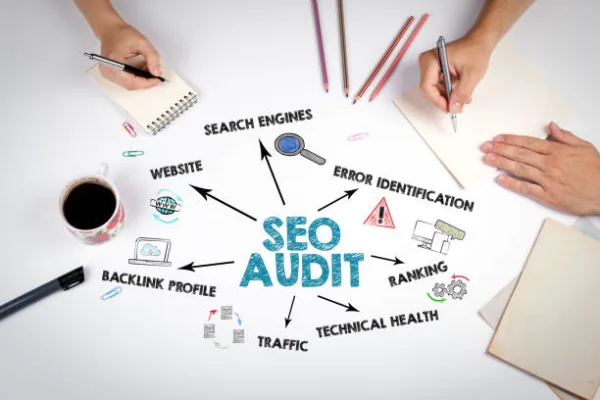
SEO Audit Checklist: 15 Things to Fix on Your Website Today
